
As part of the University of Kalba’s commitment to delivering innovative education, the University celebrates the publication of a forward-looking scientific study featured on the website of the Federal Authority for Identity, Citizenship, Customs and Port Security and the General Directorate of Residency and Foreigners Affairs – Dubai, entitled:
“Challenges of Protecting Copyright in the University Environment in the Era of Generative Artificial Intelligence.”
The paper was presented by Dr. Ayman Zain, Associate Professor of Civil Law at the University of Kalba, at the Artificial Intelligence Innovations Conference held during Dubai AI Week, which was attended by international experts. The study includes several significant recommendations aligned with the recent visions of the Ministry of Education.
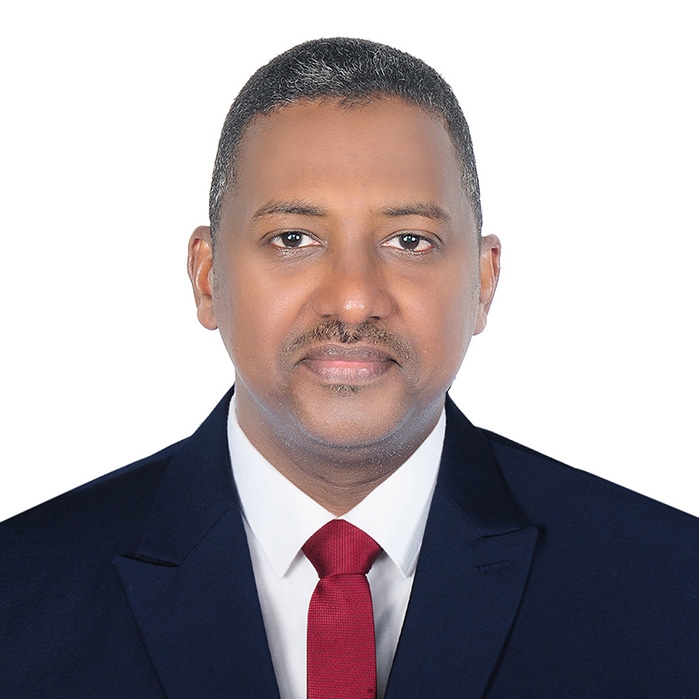
The research examined Dr. Ayman Zain’s experience in integrating generative AI into the training of law students through an AI-driven virtual moot court within the educational environment. The results were remarkable in familiarizing students with preliminary court procedures and enhancing their practical training, thereby saving considerable time and effort in this type of classroom activity.
On the other hand, the study identified the key challenges associated with the use of AI in education, particularly the protection of copyright and the promotion of academic integrity. It emphasized the importance of following the guidelines of UNESCO, which stress that educational environments must adhere to the following controls when using AI:
1. Students must be at least 13 years old to be permitted to use AI in the classroom.
2. Data protection must be adopted and the level of privacy protection enhanced.
3. Training programs should be organized to qualify teachers in the use of generative AI.
The University of Kalba continues to receive generous patronage from His Highness Sheikh Dr. Sultan bin Mohammed Al Qasimi, Ruler of Sharjah, Member of the Supreme Council, and President of the University of Kalba. This support reinforces the University’s commitment to the highest ethical standards and academic integrity while improving academic life through creativity and innovation in pursuit of excellence. The University’s administration, represented by Her Excellency Prof. Najwa Alhosani, Chancellor of the University, and His Excellency Prof. Hassan Salim, Deputy Chancellor, continues to emphasize the realization of the University’s mission and values. This has further motivated the strengthening of research efforts to highlight the importance of AI as an innovative educational tool without compromising academic integrity. The study concluded that a balanced approach is required between the integration of AI in education and strict compliance with educational and copyright laws.
The foresight study also demonstrated that, due to its predictive capacity for words and phrases, AI will likely motivate students to use it in preparing reports and research papers; therefore, the verification of the authenticity of such outputs remains the responsibility of the instructor.
With the issuance of UAE Federal Decree-Law No. 31 of 2025 on Higher Education and Scientific Research, the official direction of the United Arab Emirates toward combining innovative teaching methods with the protection of data and intellectual property rights has become evident, as stipulated in Article (15/1). In addition, the Ministry of Education has introduced regulatory controls prohibiting the use of generative AI in schools to reinforce academic integrity, protect students, and ensure a disciplined learning environment. Any AI-based activity that undermines the principle of originality in learning—such as submitting assignments, projects, or reports generated by AI—is prohibited, as it negates the learner’s personal intellectual contribution.
These regulations also prohibit the use of AI for students under the age of 13 or those enrolled in grades below Grade 7, as part of creating a sound educational environment free from cheating and manipulation of assessment requirements.
The study commends these critical legislative measures. It revealed that some academic institutions in the United States have conducted research based on the hypothesis that generative AI applications may facilitate academic cheating. Student use of such applications in completing assignments and research was described as intensive in idea generation, and a serious cheating case was detected in which AI was used to write an entire research paper, raising growing concern.
The study further stressed the necessity of continuous human oversight and examination. Students should not be left to use AI independently in ways that violate research ethics and academic integrity. Such supervision enables a legitimate and responsible use that supports honest education.
Another key finding is that legal liability may extend to educational institutions—particularly schools—if research papers or reports generated through AI are published on their websites in a manner that infringes the economic or moral rights of authors. Under the UAE Civil Transactions Law (2025), school administrations are deemed legally responsible for supervising minors—especially those under 18—following the legislative amendment to the age of responsibility under Article (84), which will enter into force in June. This underscores the importance of educational institutions in protecting intellectual property rights to avoid tortious liability. Article (265) of the new Civil Transactions Law provides:
“A minor shall be subject to the supervision of his guardian or trustee if he has not reached the age of majority. Such supervision shall transfer to his teacher at school or to the supervisor of a craft as long as the minor remains under their supervision.”
Reference
Ayman Zain, “Challenges of Protecting Copyright in the University Environment in the Era of Generative Artificial Intelligence,” presented at the Artificial Intelligence Innovations Conference (ICEQ 2025), published on the website of the General Directorate of Residency and Foreigners Affairs – Dubai in cooperation with the Emirates Academy for Identity and Citizenship, 22 April 2025, pp. 488–516.